Our 6–7-year-old cohort is designed to spark a genuine love of learning through discovery across subjects like reading, phonics, math, geography, science, history, and social communication. At this age, students are naturally curious and beginning to grow into independent leaders eager to explore the world around them.
Apogee Gulf Coast blends hands-on activities, games, and outdoor exploration, and learning becomes engaging, meaningful, and fun. This stage builds a strong academic foundation while nurturing confidence, curiosity, and a lifelong excitement for learning.
Developing Reading & Phonics
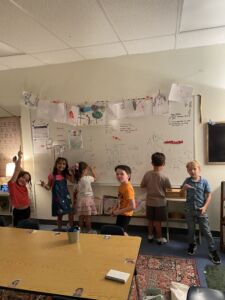
READING: Students develop fluency, comprehension, and vocabulary as they transition from reading chapter books to more complex stories. They practice identifying main ideas, making predictions, and understanding story structure to deepen their engagement with text.
PHONICS: Leaders strengthen their phonics foundations by exploring advanced word patterns, syllables, and word recognition. These skills help them confidently decode unfamiliar words and continue expanding their reading abilities.
Growing in Math
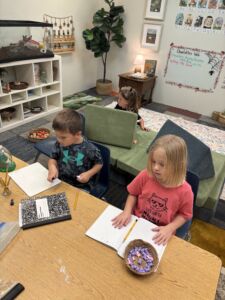
MATH: We focus on building a strong understanding of numbers, operations, and problem-solving. Students explore addition, subtraction, multiplication, division, fractions, time, and money in meaningful ways, connecting math to real-life situations. We also introduce measurement and geometry, encouraging students to apply what they learn to solve word problems.
Through hands-on activities such as counting objects, using manipulatives, and playing math games, students actively engage with mathematical concepts and develop the confidence to think critically and solve problems independently.
Expanding Geography
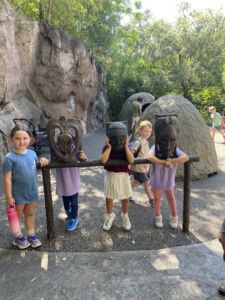
GEOGRAPHY: In this studio, students explore continents, countries, and oceans while learning to read and create maps and globes. They study geographical features like mountains, rivers, and forests to understand how the Earth is shaped and how people interact with their environment.
Activities might include, as designed by the coaches, drawing their own neighborhood or identifying regions on a globe. Students gain a broader perspective of the world and develop an appreciation for its diverse landscapes and cultures.
Hands-On Science
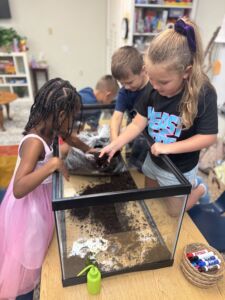
SCIENCE: In this studio, we spark curiosity and inspire discovery through hands-on exploration. Students investigate topics such as the life cycles of plants and animals, simple machines, weather, and ecosystems.
Through experiments and observation, they explore how materials and forces interact—learning by doing. Whether growing plants, studying the weather, or designing mini-experiments, students experience science in action and develop a deeper understanding of the world around them.
Learning How Our History is Shaped
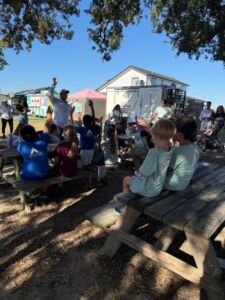
HISTORY: In this studio, students are introduced to history through stories and events from both local and global perspectives. They learn about historical figures, ancient civilizations, and key events that have shaped the world, developing an understanding of how the past connects to their own lives.
Through interactive lessons, discussions, and historical fiction books, students explore topics like early human history, community origins, and cultural diversity, gaining insight into how people and societies have evolved.
Connecting & Learning to Communicate
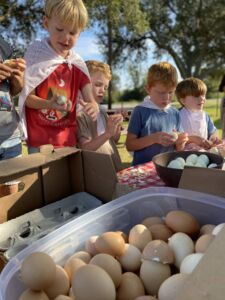
SOCIAL COMMUNICATION: In this studio, we focus on building strong communication and interpersonal skills through listening, speaking, and understanding nonverbal cues. Students learn how to collaborate effectively, solve problems, and express ideas clearly while working with others.
Socratic Discussion for Discoverers:
Discovering Connections: In this group, students are encouraged to think more deeply about subjects like reading, math, and geography. A Socratic discussion might start with a question like, “What makes a good leader?” or “Why do we need to understand the past to change the future?”
Exploring Multiple Perspectives: Through Socratic questioning, children are encouraged to consider various viewpoints and think critically about the answers they give. For example, a history lesson might involve asking, “Why do you think people in history made the choices they did?” or “What would happen if they had acted differently?”
Collaborative Learning: Students are encouraged to ask each other questions and share ideas, which fosters a sense of community and teamwork in the learning process.
Joining Over 100 Students Enjoying Apogee Education now
Become Part of Apogee Gulf Coast to Further Your Child’s Education.